Keytt Webapp Revamp
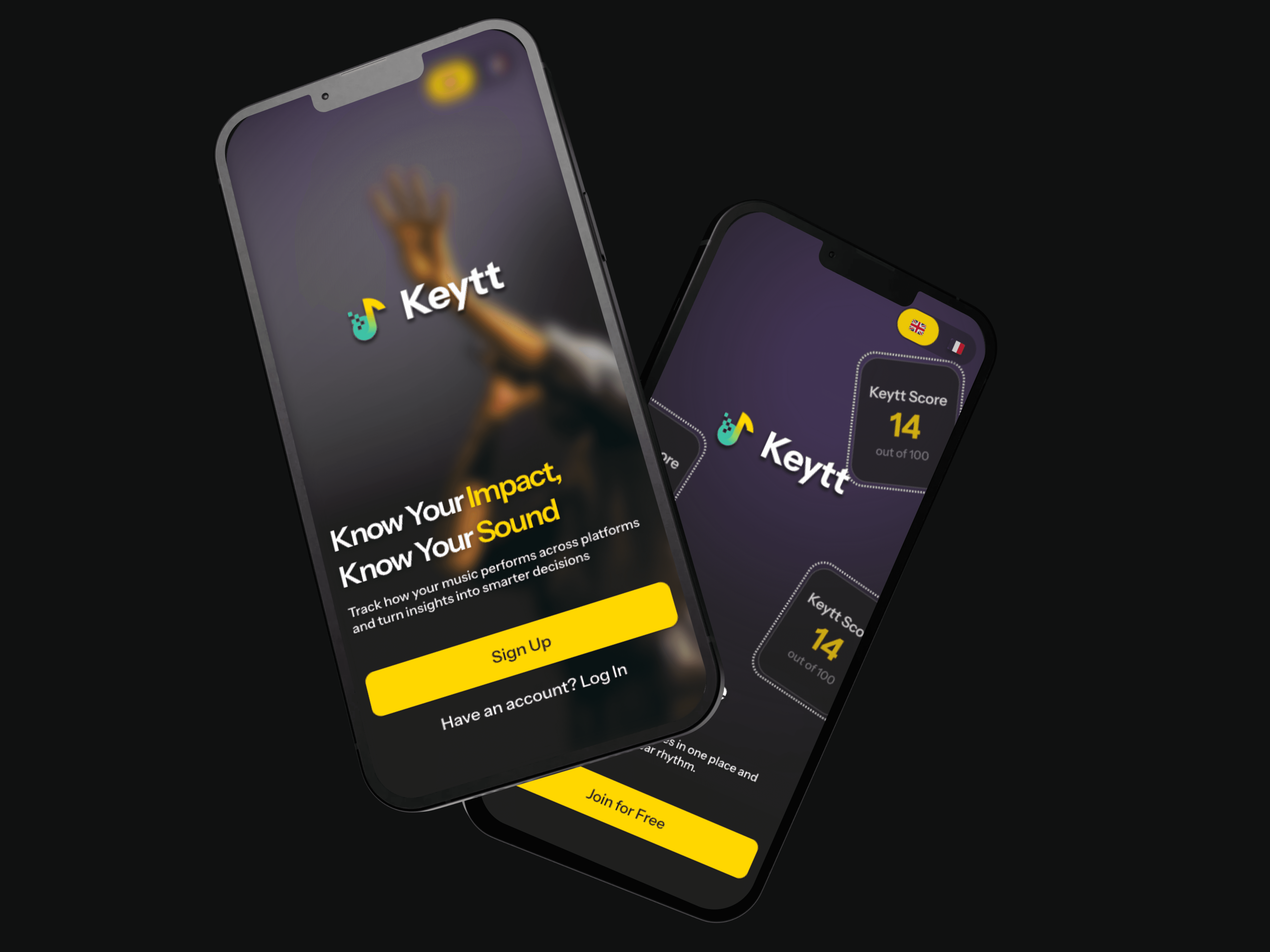
A phase-1 UX and UI redesign of Keytt’s onboarding flow, focused on clarity, trust, and reducing early user friction for artists and teams
Client:
Keytt
Date:
January 30, 2026
Type:
SAAS Website
Role:
UI/UX Designer
Overview
Keytt is a Paris-based SaaS platform that helps artists, teams, and labels understand their music performance across platforms and make better growth decisions using analytics and scoring.
This project focused on Phase 1: Onboarding, with the goal of improving user understanding, reducing friction, and increasing onboarding completion rates.
Phase 2 (Dashboard and Artist Profile) is currently in progress.
The Problem
Keytt was driving traffic through ads, but a large percentage of users were dropping off during onboarding.
Key issues in the existing flow:
Users were asked to commit too early by entering artist details before understanding the product.
The value of the product was not clearly explained upfront, especially for first-time visitors from ads.
There was no clear distinction between individual artists and teams or labels.
The flow felt forced, which increased abandonment during setup.
This resulted in low onboarding completion and poor activation.
Project Scope
Phase 1: Onboarding Redesign
What I worked on:
Complete onboarding UX flow
Mobile-first and desktop layouts

Authentication and verification screens
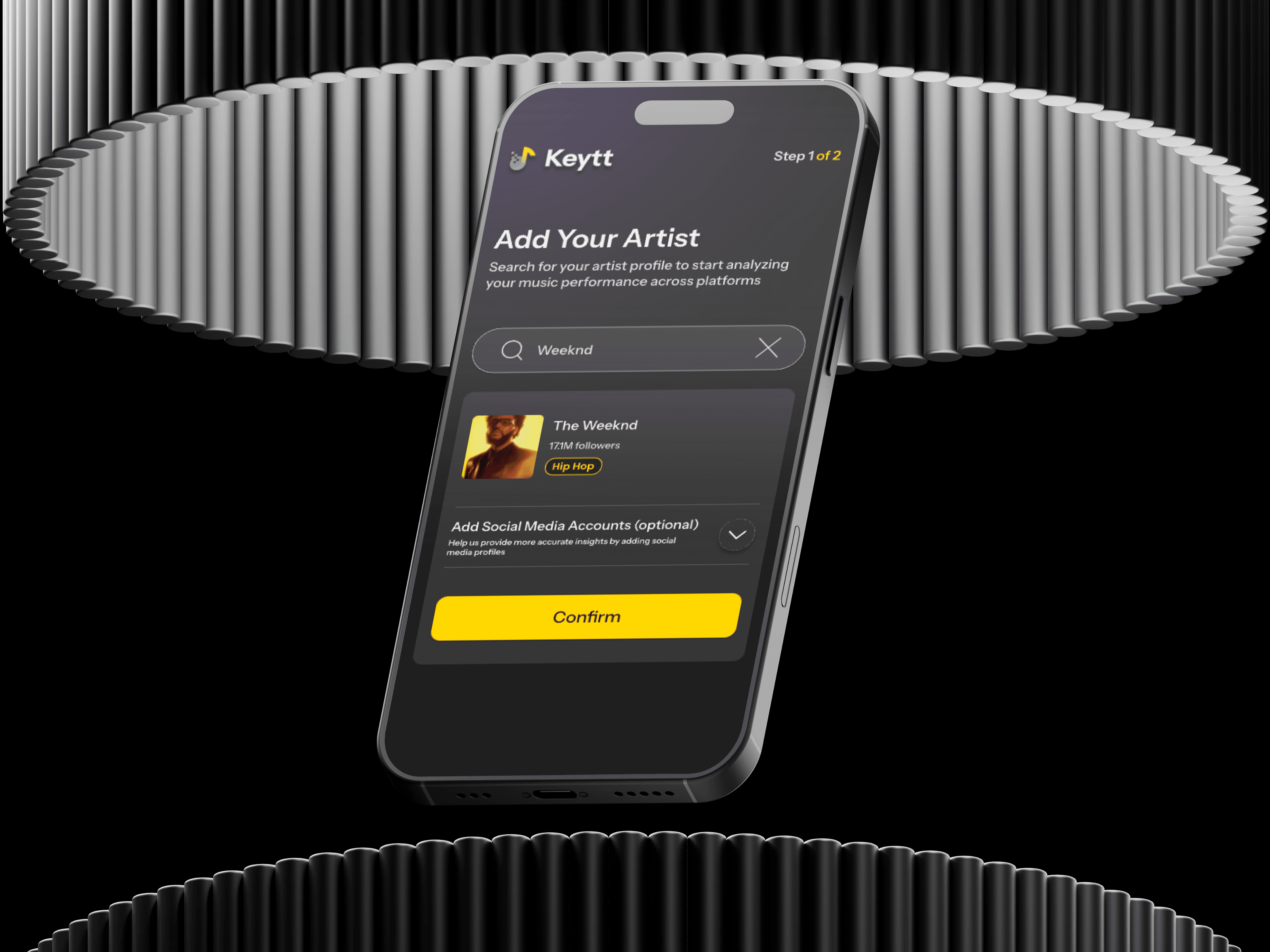
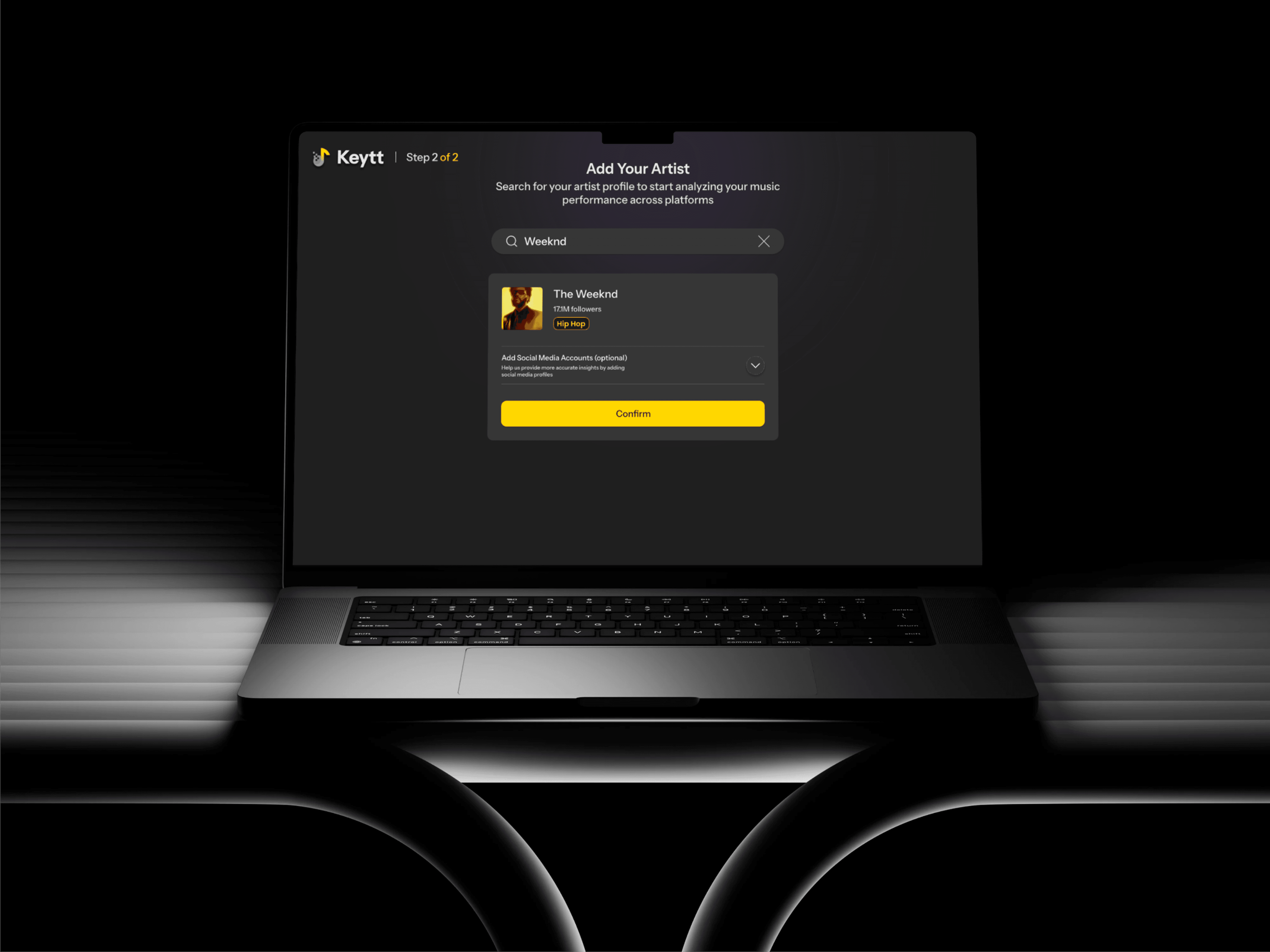
Artist setup flow
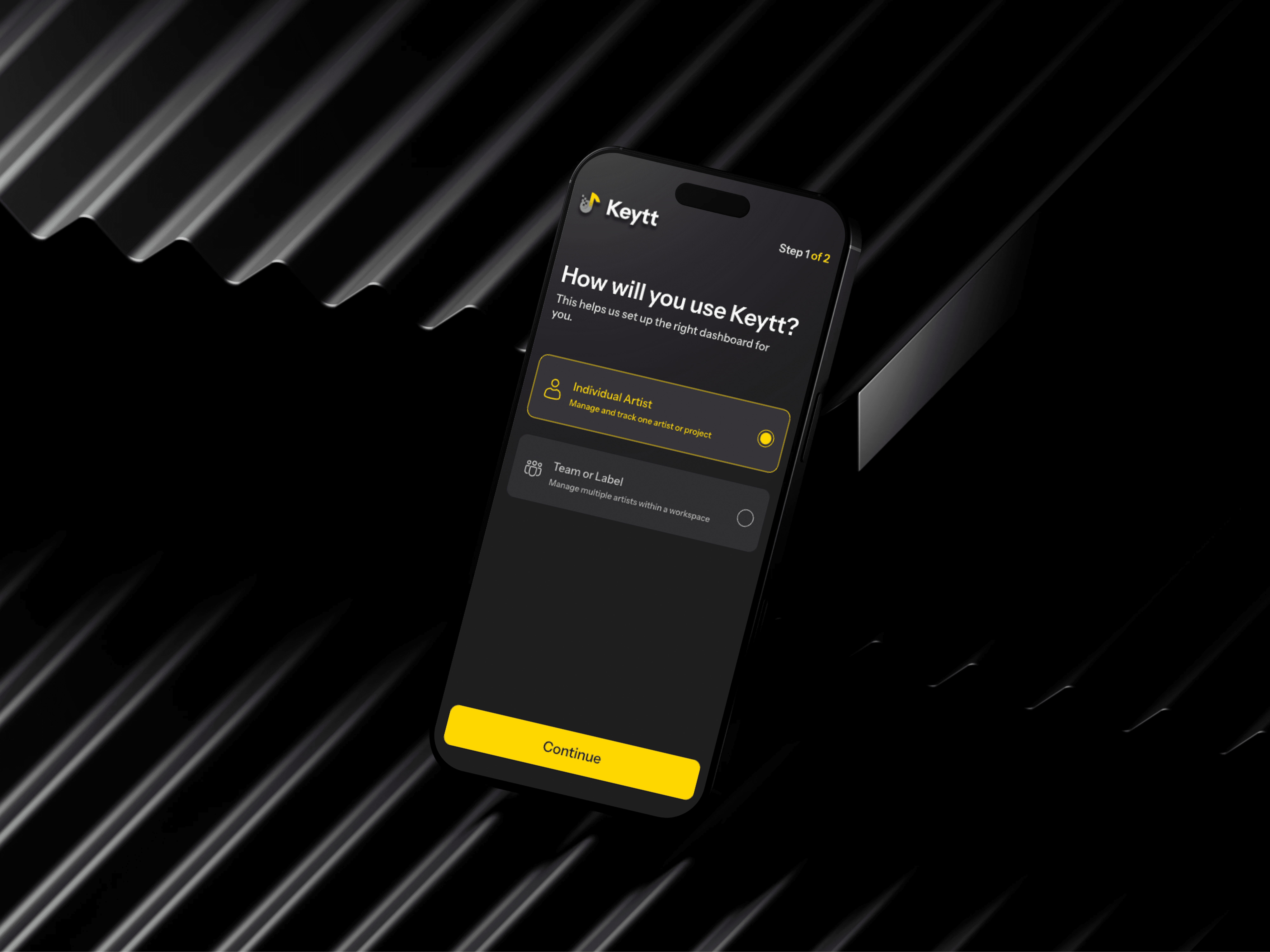
Individual vs team decision flow
Visual direction and UI system
Consistent typography and spacing naming for future scalability
My Design Approach
1. Reduce Commitment Anxiety
Users coming from ads are still evaluating trust.
The new flow focuses on:
Explaining what Keytt does before asking for input
Moving artist setup after authentication
Using progressive disclosure instead of forcing decisions
2. Educate Before Asking
Instead of jumping straight into setup, the onboarding now:
Introduces Keytt’s core value in three short explanation screens
Clearly communicates:
Real-time performance tracking
Smarter growth decisions
Keytt Score as a single success metric
This helps users understand why the product is worth committing to.
3. Progressive Onboarding for Artists and Teams
A key UX decision was separating intent early:
Individual Artist
Copy adapts to feel personal and lightweight
“Add your artist profile”
Team or Label
Copy shifts to “Add your first artist”
Clear reassurance: “You can add more later”
This avoids making teams feel forced while keeping onboarding flexible.
4. Clear, Premium Visual Direction
The visual system was designed to feel:
Premium but not cluttered
Confident and trustworthy
Consistent across mobile and desktop
Key choices:
Dark mode-first UI to match the product’s analytical nature
Warm accent color for CTAs to balance contrast
Subtle gradients for depth, not decoration
Scalable typography and spacing naming for handoff
Final Flow Summary
Ad traffic lands on onboarding explanation screens
Users understand the product value
Authentication (Sign up or Log in)
Email verification
Choose Individual or Team usage
Add artist with optional social links
Dashboard entry
The flow prioritizes clarity, trust, and reduced friction at every step.
Outcome
Founders approved the Phase 1 onboarding direction
Minor UX refinements were addressed collaboratively
Designs are currently being integrated
Artist interviews are planned to validate performance before scaling Phase 2