solidbench Redesign
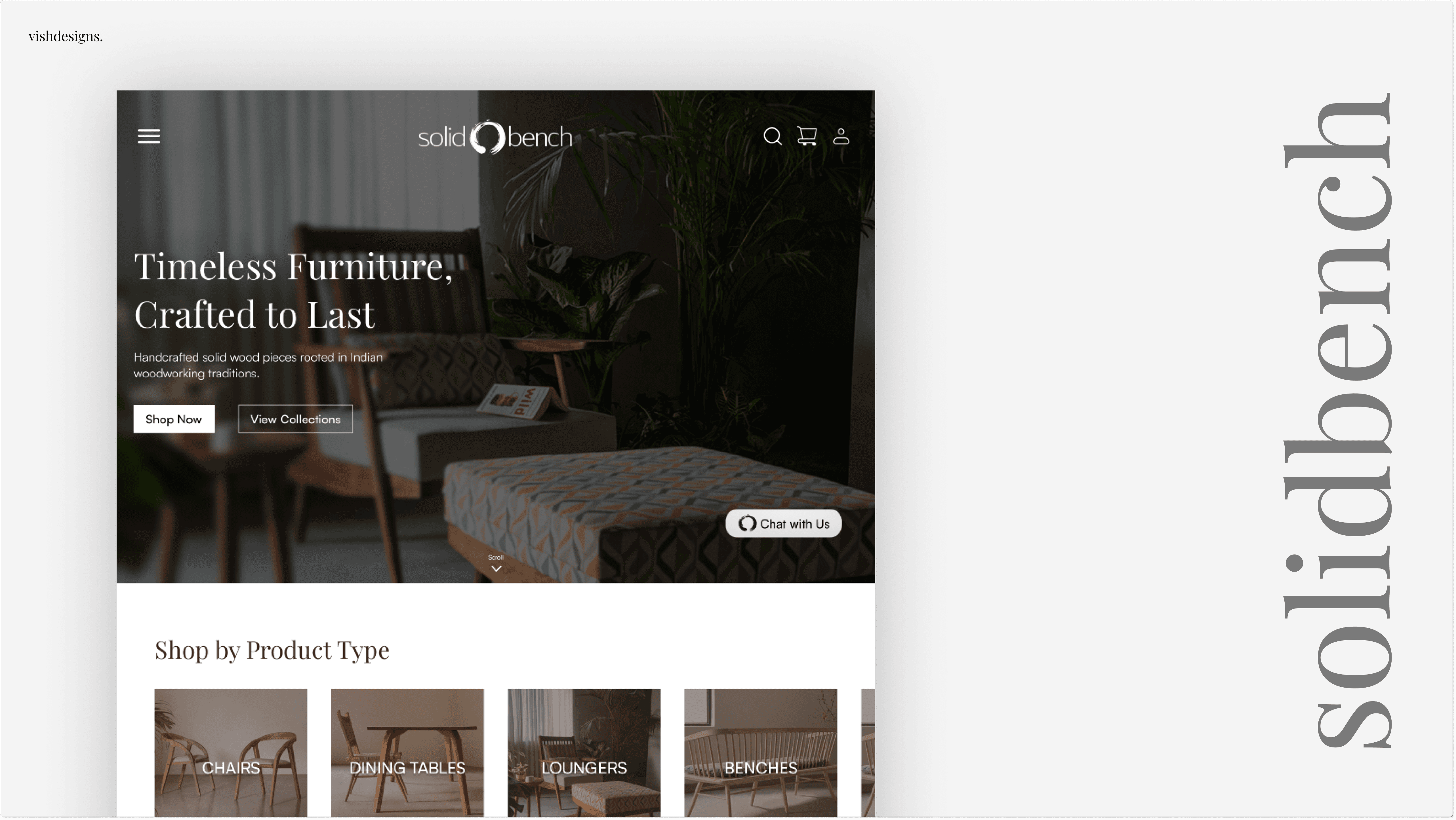
An exploratory UI/UX redesign of the solidbench landing page, created to elevate the brand’s premium positioning and better reflect its focus on handcrafted solid wood furniture, material-led storytelling, and quiet luxury. This concept rethinks hierarchy, spacing, and visual rhythm while retaining the brand’s original voice and content.
Client:
solidbench
Date:
January 25, 2026
Type:
Landing Page
Role:
UI/UX Designer

Role
UI/UX Designer (Web)
Tools Used
Figma, Midjourney
Background
solidbench is a handcrafted furniture brand focused on solid wood furniture rooted in Indian woodworking traditions. Their existing website already had strong fundamentals: quality photography, a calm tone, and clear product categorization.
The challenge was not to reinvent the brand, but to refine the landing page experience to feel more premium, intentional, and editorial, without turning it into a SaaS-style or overdesigned interface.
This redesign was created as an exploratory concept to demonstrate how subtle UI and layout decisions can elevate perception while respecting the original brand identity.
The Challenge
The existing landing page was functional but felt catalog-heavy
Too many elements competed for attention at the same hierarchy level
Brand storytelling and craftsmanship were present, but visually understated
The experience leaned more toward “e-commerce” than “premium furniture brand”
The goal was to reduce noise, improve pacing, and let materials and imagery lead.
Design Goals
Preserve the brand’s existing voice and copy
Create a calmer, more premium first impression
Shift from product listing to a curated editorial flow
Improve visual hierarchy and whitespace
Avoid SaaS, startup, or trend-driven UI patterns
Make craftsmanship and material the hero, not UI elements
Design Approach
1. Hero Section
The hero was redesigned to feel editorial and aspirational, using a strong lifestyle image and restrained copy. Instead of pushing “bestsellers,” the hero focuses on brand ethos and craftsmanship.
Only essential CTAs were retained to avoid decision fatigue.
2. Simplified Navigation & Structure
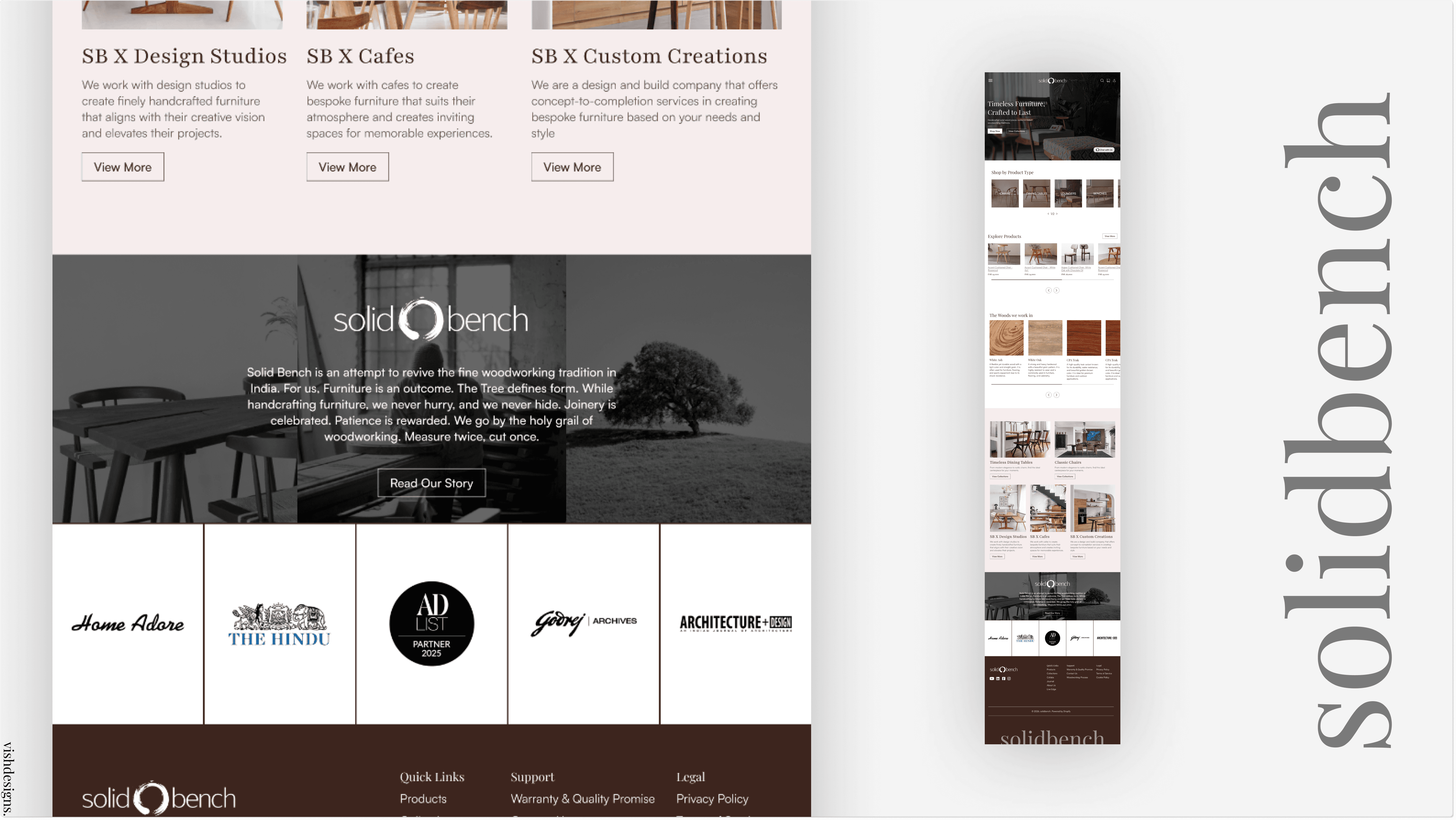
The page structure was refined to guide users through brand, craft, and products rather than overwhelming them with multiple grids and sections upfront.
Navigation was kept minimal and calm to align with premium furniture browsing behavior.
3. Product Discovery
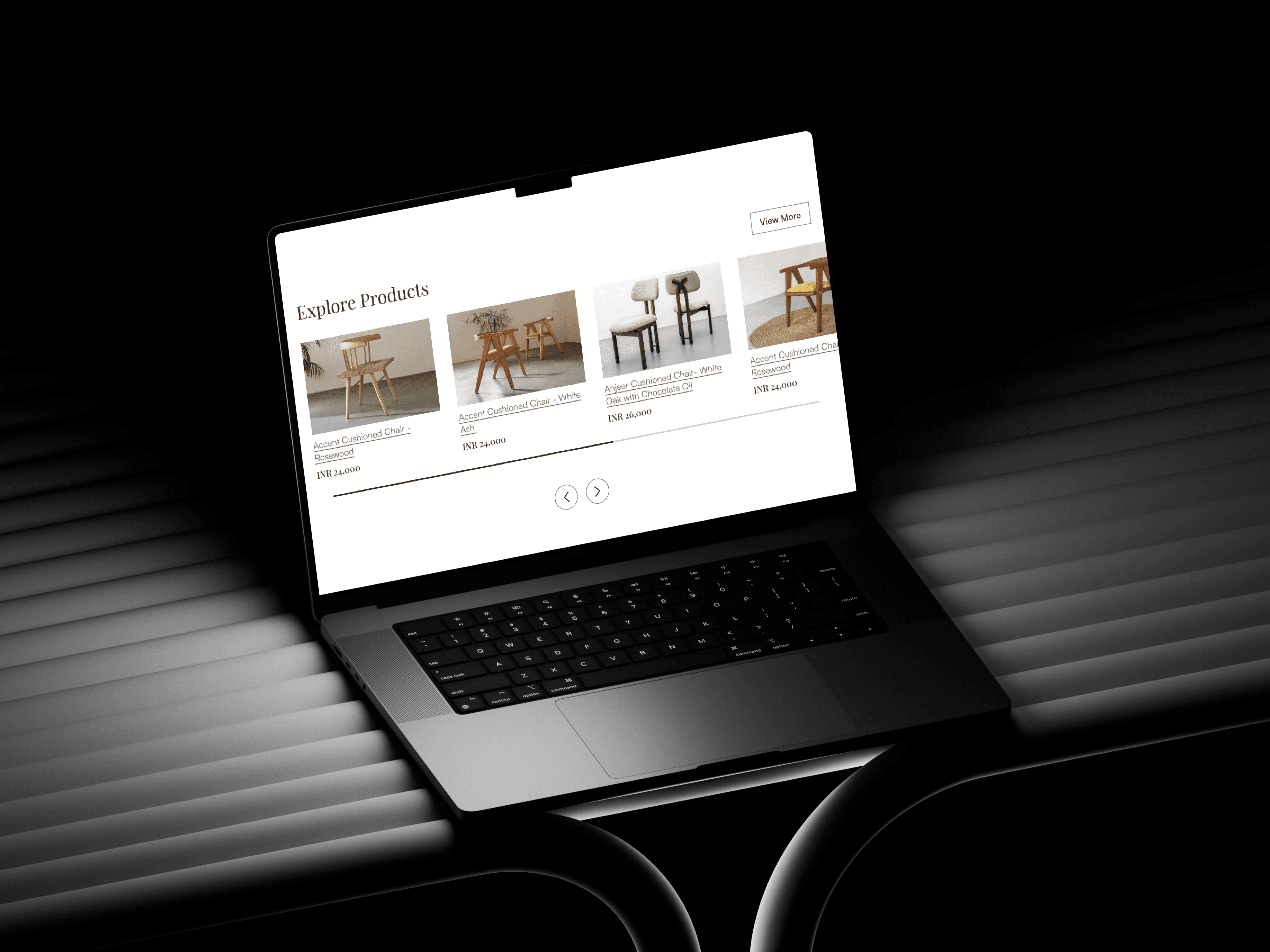
Product cards were intentionally minimal:
Image-first presentation
Product name
Material or category
Price (where relevant)
No ratings, badges, or aggressive CTAs were added, keeping the experience closer to a curated showroom than a marketplace.
4. Craft & Materials Storytelling
The materials section was elevated by reducing the number of items shown at once and allowing each wood type to breathe visually. This reinforces solidbench’s craftsmanship and sourcing values without over-explaining.
5. Visual System
The visual language was intentionally restrained:
Warm off-white backgrounds
Charcoal and near-black typography
Subtle wood-toned accents
Generous spacing and consistent rhythm
Typography was kept clean and timeless to ensure longevity and avoid trend-driven design.
Outcome
The final concept presents solidbench as a quiet, confident, premium furniture brand—one that values material, process, and longevity over aggressive selling.
This redesign demonstrates how thoughtful restraint, hierarchy, and spacing can significantly elevate perception without changing the brand’s core identity or content.
Notes
This project is an exploratory concept created for a potential client.
It was not commissioned or launched, and all branding remains the property of solidbench.